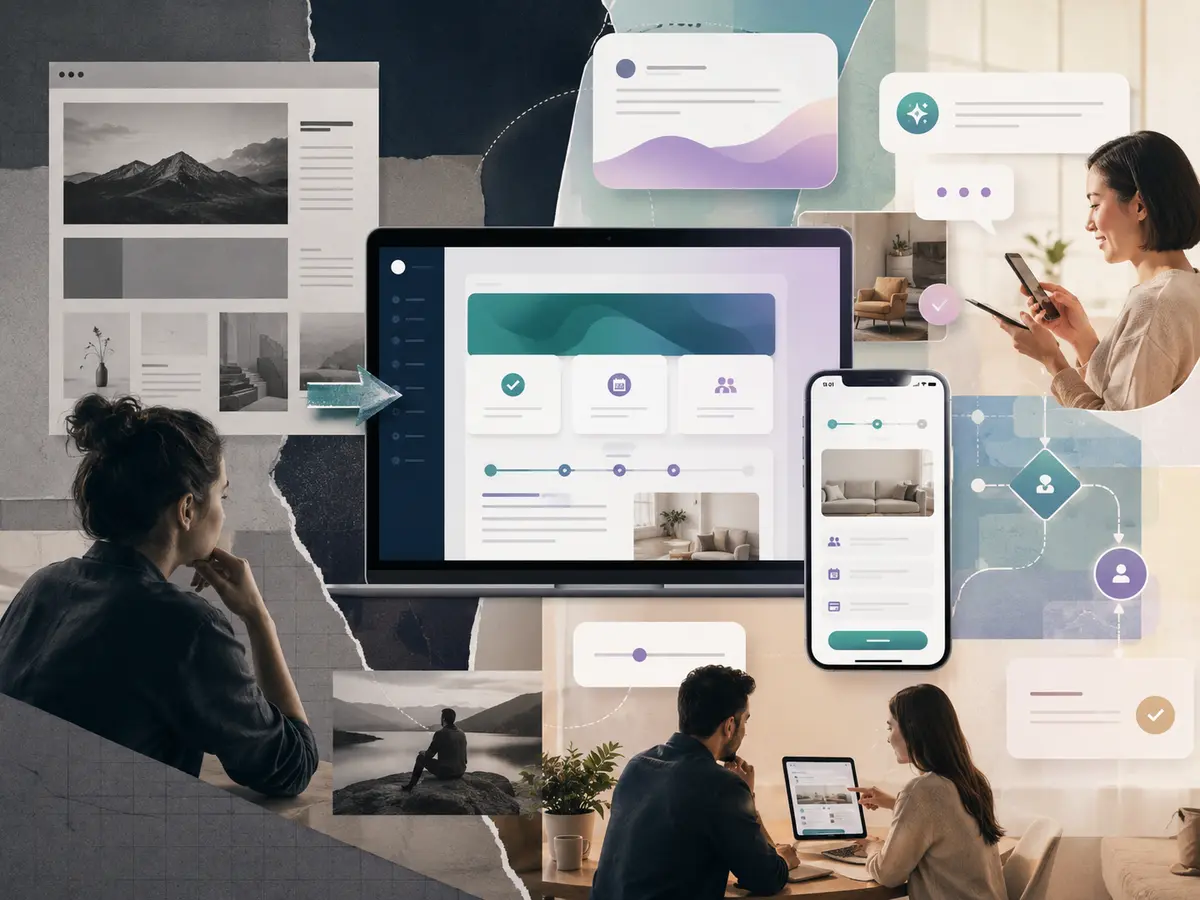
Most websites do one thing: they present a business and leave visitors to figure out what is relevant to them, and what to do next.
That has worked. But it is no longer good enough.
The most important shift in web design right now is not about colours, animations or layout. It is about something more fundamental: the website should understand what you are trying to do, and help you do it. Not just inform, but drive action.
This is the direction the entire industry is moving toward. Webinale 2026 (one of Europe's leading conferences for web professionals) has built its entire programme around exactly this: "Web Interaction in the Age of AI." Not AI as a tool for generating content, but AI changing the fundamental way users interact with digital products. When an entire industry rallies around a single theme, it is because something has already shifted.
From information to intent
Think about the difference between walking into a shop where a staff member asks "what can I help you with?" versus walking into one where everything is stacked on shelves with no signs, and you're left to figure it out yourself.
Both shops sell the same things. But one is much easier to buy from.
That's the transition websites are starting to make. Not necessarily through large technical solutions, but by getting better at meeting visitors where they are: understanding what they're looking for, guiding them toward the right action, and removing friction along the way.
This is broadly called intent-driven design. It's a wide term, but the core is simple: the website isn't a reference work waiting to be used. It's an active guide.
What this means in practice
For a business, this makes some questions more important than before.
Does a new visitor know within the first few seconds what the website can do for them? Not what the business offers in general, but what it means for them specifically?
Does the site actively help people take the next step, or does it leave them to figure that out on their own? A contact form is fine. A form that adapts to what you actually need is better. A chat function that can answer common questions immediately might be even better: depending on the business.
Is the website just readable, or is it usable? That's an important difference. A site with good copy gives information. A site built around what the visitor is trying to accomplish gives action.
Where to start
It is tempting to assume this is about major investments in AI, chatbots and advanced technology. Sometimes it is. But it starts with one question:
What do people come to your website to do, and are you actually helping them do it?
The answer will reveal more about what is costing you customers than any technology trend will.
What this means for you
A website that helps visitors accomplish something converts better than one that just informs. It is easier to use on mobile. It keeps people engaged longer. And it signals more clearly to Google and other search engines what the site is actually about.
This is not a trend to consider. It is a competitive advantage to take.
At Ibenta, we build websites and digital solutions designed around user intent, not around what looks good in a presentation. That is what drives growth.
Want to know specifically what is holding your website back? Get in touch: we will give you a clear picture of what needs to change and where to start.