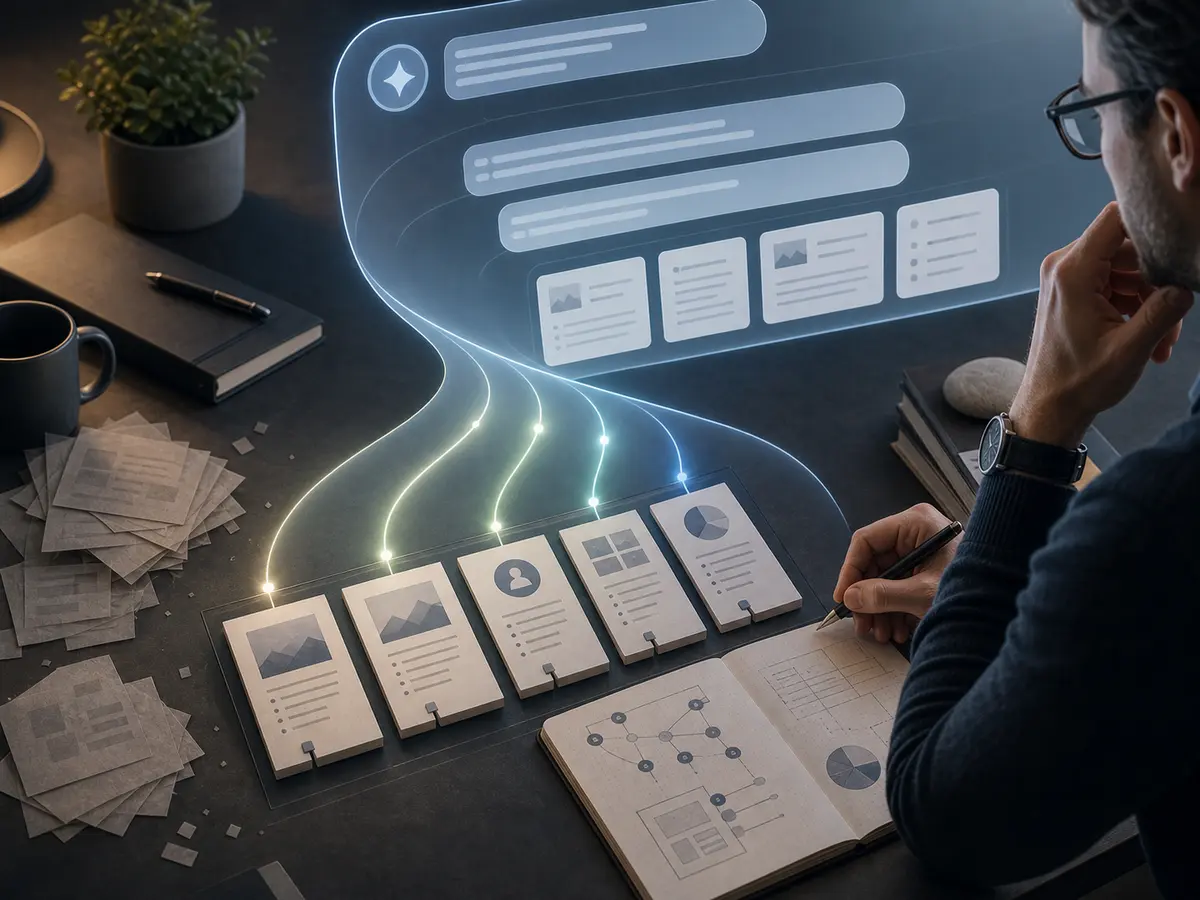
Most business owners have noticed that Google looks different lately. The familiar list of ten blue links is giving way to something else: a full AI-generated answer at the top, often with sources tucked below, and a conversation you can continue with follow-up questions.
This is Google AI Mode, and it is not a lab experiment anymore. It is becoming the default experience for a growing share of searches, especially on mobile and for questions where Google thinks a direct answer is more useful than a list of links.
For businesses that rely on organic search traffic, this is a significant shift.
What has actually changed
AI Overviews have been around since 2024. AI Mode goes further. Instead of a quick summary above the results, AI Mode replaces the traditional results page with a full conversational interface powered by Gemini. The user asks, Gemini answers, the user follows up, and the session continues without ever leaving Google.
The effect on traffic is direct. Queries that used to send visitors to your website now get answered inside Google. The user gets what they need, and your site never enters the picture.
The businesses that do enter the picture are the ones being cited. Gemini pulls from specific sources to back up its answers. Those citations drive real traffic, and they tend to be more qualified than a typical organic click, because the user has already been given context about what you offer.
Who gets cited, and who does not
Gemini does not cite businesses randomly. It cites sources that make its answers better. That means content that is:
Concrete and specific. Generic descriptions of services do not get cited. Content that explains a process, gives a clear answer or addresses a named problem does.
Structured and readable. Clean HTML, correct heading levels and content that makes sense read from top to bottom: these make it easier for AI to extract what it needs. Cluttered or poorly structured pages are harder to use and get skipped.
Clearly attributed. Who is saying this, and why should anyone trust them? Author credentials, company context and experience signals all affect whether content is treated as a credible source.
Up to date. Stale content from 2021 is less likely to surface in 2026 AI answers. Recency matters, especially for fast-moving topics.
A business with a clear service page that explains what it does, who it is for, how the process works and what the result looks like: that business has something Gemini can use. A business with a homepage full of buzzwords and a contact form does not.
Three things worth doing now
1. Audit your most important pages for clarity
Pick your top five service or product pages. For each one, ask: does this page actually answer the questions a customer would have before buying? If not, that is the first thing to fix. No amount of technical optimisation compensates for content that does not say anything useful.
2. Add or update your structured data
Schema markup: the structured data that tells Google exactly who you are, what you offer and where you operate, is one of the clearest signals you can send to an AI system. Most SMBs have not set it up correctly, or at all. It is an hour of work that pays forward for years.
3. Make your pages work as standalone answers
In AI Mode, a user might land on a single page with no context from the rest of your site. That page needs to work on its own: clear headline, concrete body, obvious next step. Think of each page less as part of a website and more as a self-contained answer to a specific question.
The real question
AI Mode does not make your website irrelevant. It raises the bar for what a website needs to do. Traffic volumes may shift, but the visits that do come through are from people who have already been told something useful about you by Google.
The businesses that benefit from that are the ones that gave Google something worth citing in the first place.
Want to know whether your content is set up to earn citations in AI Mode? Get in touch: we will review your service pages, content structure and structured data and give you a clear picture of what to tackle first.