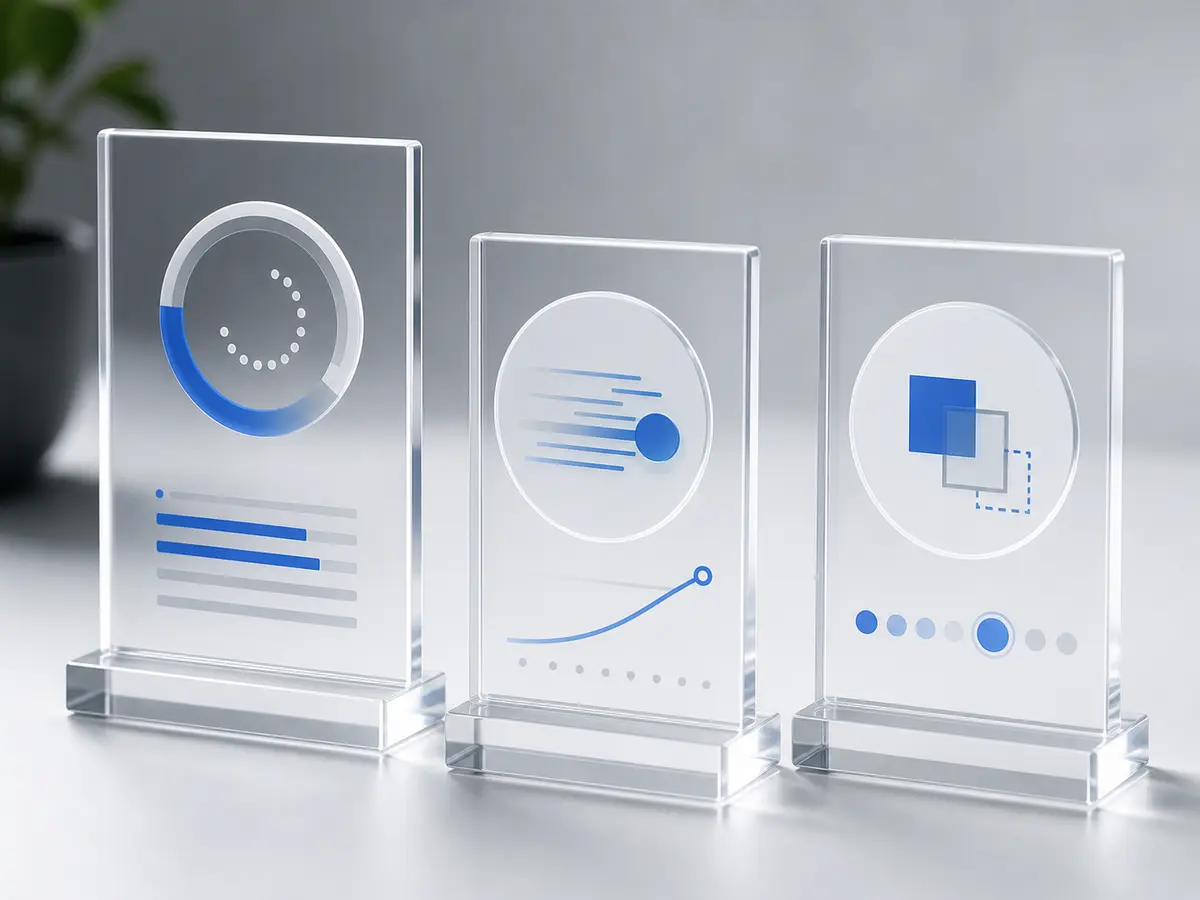
In May, Google announced three new measurable quality signals collectively called Core Web Vitals. From 2021, these will become ranking factors in Google Search, combined with existing signals like mobile-friendliness, HTTPS and safe browsing.
This is the first time Google has specified such concrete, measurable requirements for page experience. For website owners, it is an invitation to improve the site in good time, and a clear statement of what Google means by "good user experience."
The three signals
Largest Contentful Paint (LCP): load time for the main content LCP measures how long it takes from when the page starts loading to when the largest visible piece of content has finished loading: usually a large image or a headline. Target: under 2.5 seconds.
First Input Delay (FID): responsiveness FID measures the time between a user doing something (clicking a button, tapping a link) and the browser actually responding. Target: under 100 milliseconds.
Cumulative Layout Shift (CLS): visual stability CLS measures how much the content on a page shifts around as it loads. Have you ever clicked the wrong link because the page moved just as you tapped? That is high CLS. Target: under 0.1.
Why CLS is the most underrated of the three
Most website owners have thought about load time for years. LCP and FID are extensions of that.
CLS is different, and it is the one that most often surprises. Websites with images that have no specified dimensions, ad slots that appear while the page is loading, or fonts that swap during loading can have high CLS without anyone having noticed.
A page that jumps around as it loads feels unreliable. That is a poor user experience, and from 2021 it will count in rankings.
How do you measure your own Core Web Vitals?
Google provides several free tools:
PageSpeed Insights: Enter your URL and get an immediate score and improvement suggestions for both mobile and desktop.
Google Search Console: Under "Experience" you will find a Core Web Vitals report based on data from real users on your site. More representative than lab tests.
Chrome DevTools: For those with a technical background, Lighthouse in Chrome provides a detailed analysis.
What should you do now?
You have time. Core Web Vitals become ranking factors in 2021, not today. But those who start now will be better positioned than those who wait.
The most common improvements:
- Optimise images (size and format: WebP is more efficient than JPEG/PNG)
- Specify width and height on all images so the browser can reserve space (reduces CLS)
- Reduce JavaScript that blocks the page from rendering content
- Use a fast hosting provider with good server response time
- Consider lazy loading for images further down the page
Many of these improvements are technical and require knowledge of the codebase. But the first step (measuring where you are today) is something anyone can do.
Want to know what your Core Web Vitals scores are and what should be prioritised? Get in touch: we will run a technical review and give you a prioritised action list.