A service page has one job: help the right customer understand that they should get in touch.
Most service pages do not do that job. They describe what the business offers, list the features and end with "contact us for more information." That is not a sales argument. It is a product label.
What the customer is actually thinking when they read your page
A potential customer landing on your service page has usually already decided they need the service. They are not there to be convinced that web design matters. They are there to assess whether you are the right supplier.
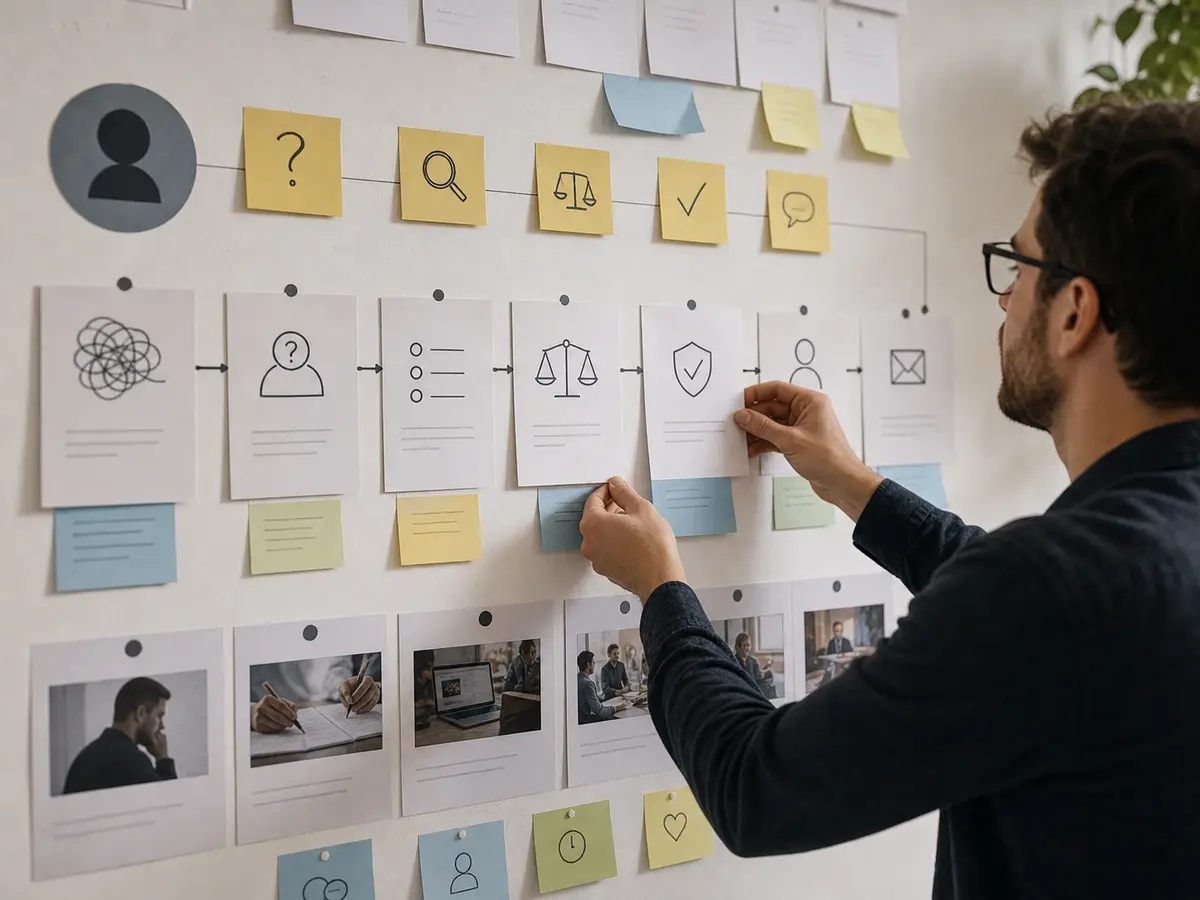
The questions they are asking: consciously or not:
- Do these people understand my problem?
- Have they done this for someone like me?
- What can I expect from the process?
- What does it cost, roughly?
- Do they seem trustworthy?
A service page that answers these questions converts. One that just describes the service rarely does.
The most common mistakes
Too much about you, not enough about the customer "We are a leading agency with over ten years of experience" is not an opening argument for the customer. "Here is how we help local trade businesses get more enquiries through their website" is.
No concrete examples Claims without evidence are noise. "We deliver results" means nothing. "We helped a local plumbing firm triple their contact form submissions after a new website" means something.
Unclear next step Many service pages end with "contact us" without explaining what happens next. What does getting in touch involve? A meeting? A free review? A quote? Make it concrete.
Content written for one type of customer Services often have several types of clients with different needs and questions. A web design service sells differently to an established business wanting a redesign, a startup about to launch and a sole trader who has never had a website. Consider whether it makes sense to separate them.
The structure that works
A service page that converts usually has these elements:
1. An opening that addresses the problem Not "We offer web design in London." But: "Your website is often the first impression a customer has of your business. Does it reflect the quality of what you actually deliver?"
2. Who it is for, and who it is not Be clear about who the service suits. It builds trust and filters out the wrong leads. "We work best with SMBs of 5–50 people who want a website that actively generates leads."
3. What you actually do: concretely Not "we deliver bespoke solutions." A short description of the process: what happens from first meeting to launch, what the client is involved in and what they can expect.
4. Evidence References, case studies, client quotes, results. Ideally specific and named, not anonymous praise.
5. Answers to common questions Price range, timeframe, what the client needs to contribute, what happens after launch. Answer these rather than forcing the client to send an email to find out.
6. A clear next step with low friction "Book a no-obligation meeting" converts better than "send us an enquiry." "Get a free review of your current website" converts better than both.
A simple test
Read through your service page and count the number of times you use the word "we" versus the number of times you address the customer directly. If "we" wins by a wide margin, the page is written from the wrong perspective.
The best service page is not the one that impresses: it is the one that helps the customer say "yes, this is for me."
Want help reviewing your service pages and making them more effective? Get in touch.