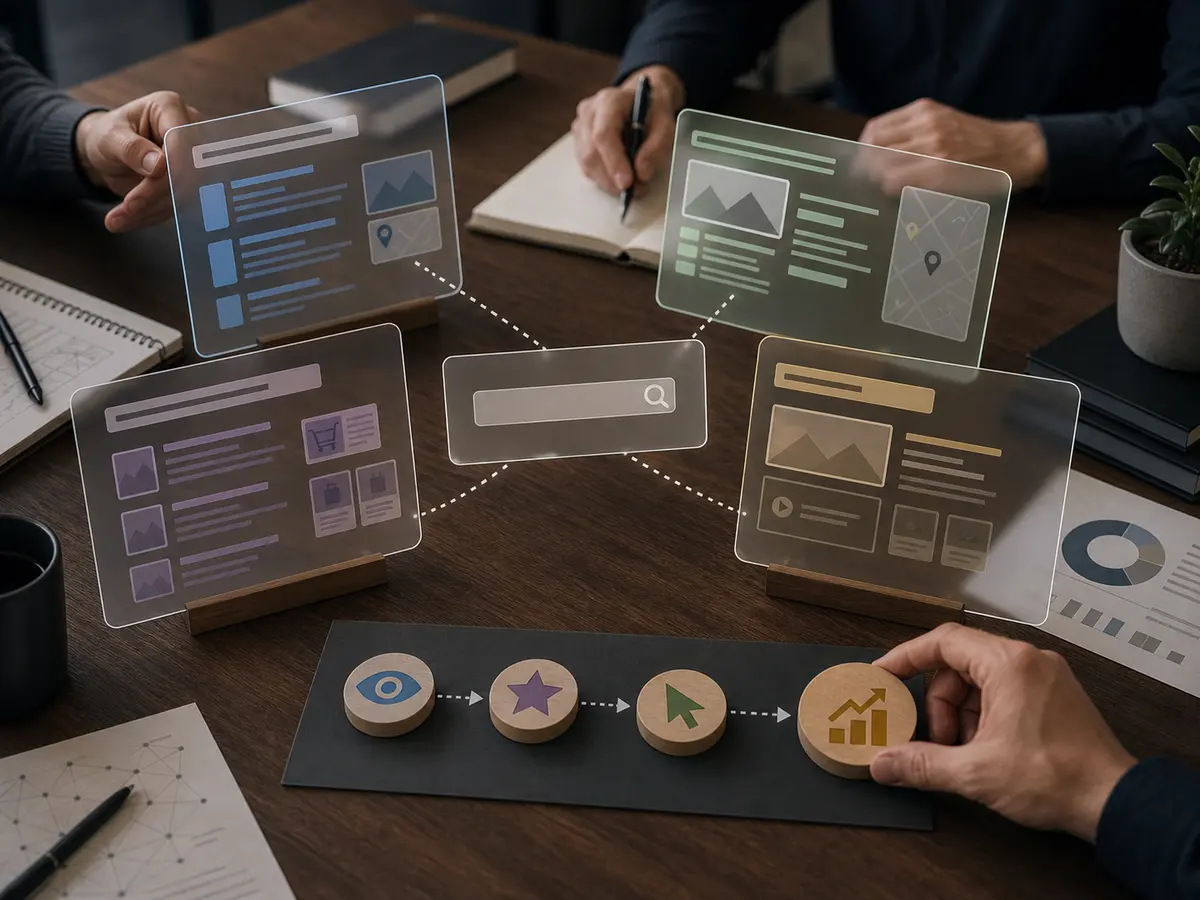
"Which position do we rank at in Google?" is no longer a sufficient question.
Search Engine Journal reported on 20 March on Google AI Mode personalisation, crawl limits and new data around AI Overviews and traffic. The combined signal is clear: search is becoming harder to measure cleanly.
When users receive more personalised answers, AI responses affect click behaviour, and system constraints limit what Google indexes, classic ranking is only one part of the picture. For businesses, that means SEO reporting needs to grow up. Position and traffic are not enough: you also need to track visibility quality, conversions, branded search and whether your content is actually moving the right customers forward.
Ranking alone does not answer the important questions
Knowing whether you appear on page one for key searches is still useful. But ranking alone does not answer:
- Are the right customers finding you?
- Do they understand what you offer?
- Are they returning via branded search?
- Are they converting from service pages?
- Is your content contributing to sales even without a first click?
- Are you being cited or mentioned in AI answers?
SEO reporting that only shows position and traffic can give a misleading picture of what is actually working.
More touchpoints mean messier data
A customer might discover you on LinkedIn, read a blog post, ask an AI about alternatives, see you in Google, click an ad, and finally go directly to your site.
Which channel gets the credit? Usually the last one. But the last touchpoint is not always the most important one. That is why businesses need to look at the full picture rather than optimising for the last click.
What should you measure?
A modern visibility strategy should track:
- Organic traffic to key pages
- Conversions from service pages
- Branded search and direct traffic
- Leads and lead quality
- Visibility across priority topics
- Social channel engagement
- Paid campaign results
- Which pages are supporting sales conversations
Not everything needs to be measured perfectly. But enough needs to be measured to make better decisions, and to separate what is working from what merely looks like it is.
Dashboards need interpretation
A dashboard is not a strategy. Numbers need context.
If organic traffic is falling, it could be AI answers, seasonality, a technical issue, a shift in search behaviour or weaker content. If impressions are rising while clicks are falling, you may be appearing in more zero-click positions. If leads are growing while traffic falls, the quality of your visitors may actually be improving.
Marketing data should be discussed, not just exported.
Measure what helps you choose the right action
The goal of good reporting is not more graphs. It is knowing what to improve, and in what order. For some businesses that means better tracking of form submissions and phone clicks. For others it means connecting paid search, SEO and CRM more clearly. For many it means simplifying reporting until it is actually usable in decisions.
When search becomes more personal and AI-driven, businesses need better questions, not just more data.
Want a clearer picture of what your website and marketing are actually contributing? Get in touch: we will review your measurement setup and build reporting that gives you something to act on.