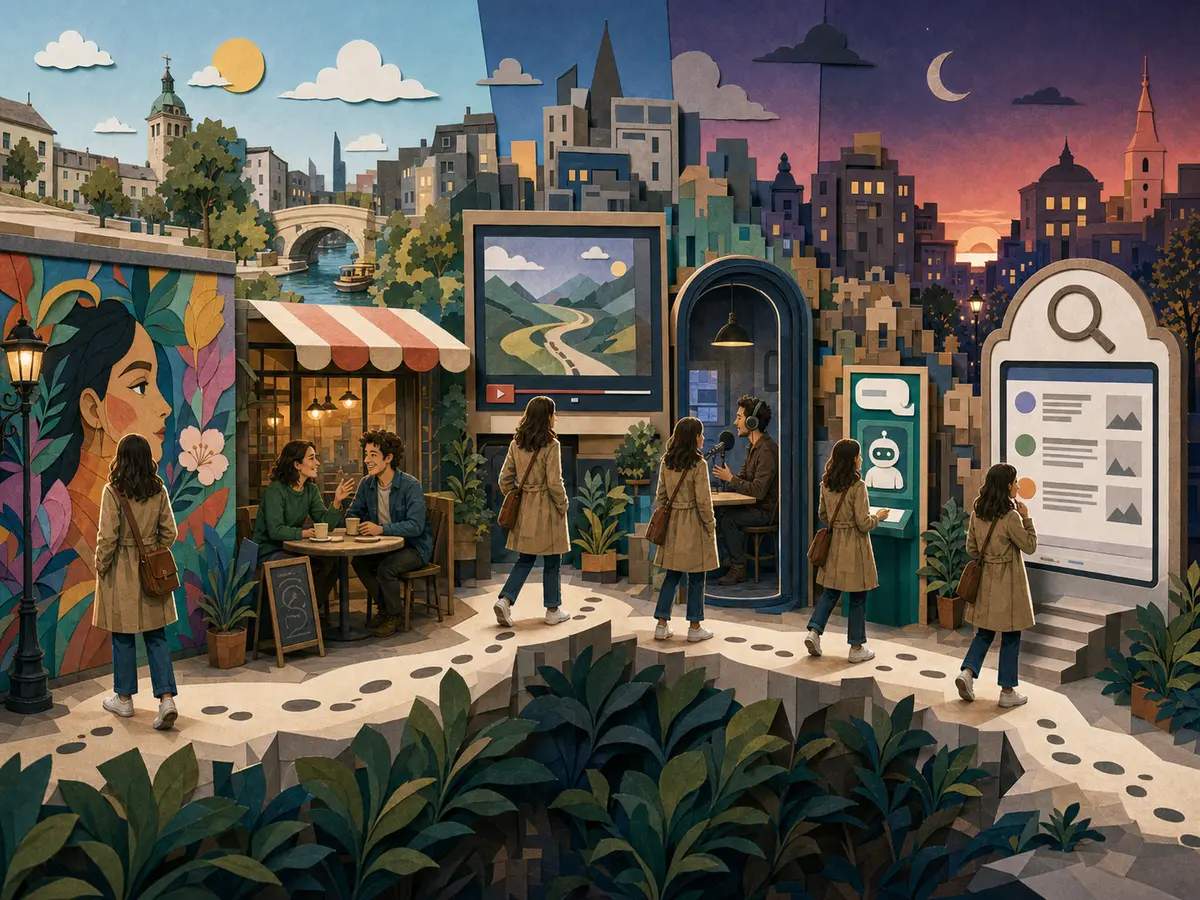
A customer might first see you in a LinkedIn post, read a discussion on Reddit, watch a YouTube video, ask ChatGPT about alternatives, and only then Google your name.
That is not an exception. It is becoming the norm.
Search Engine Land wrote on 16 January about how digital PR and social search work together in 2026. The conclusion is simple but the consequences are significant: visibility is built across channels, and SEO alone is not enough.
Visibility is not a single channel
Many businesses still treat marketing as separate boxes: SEO, ads, social media, website, content, PR. The problem is that customers do not experience it that way.
Customers form one combined impression of the brand. If the message is clear on the website but unclear on social media, it creates friction. If ads promise something the service page does not explain, trust is lost. If others describe you in ways you do not reinforce, AI answers and search results become harder to predict.
In a search landscape where AI draws signals from many more places than just your website, the consequences of inconsistent communication are amplified.
The website is still the hub, but its role has shifted
The fact that the customer journey starts before Google does not make the website less important. It makes it more important as the confirmation point.
By the time someone clicks through, they have already done research. The website needs to confirm the impression they have formed, and do three things quickly:
- Explain what you do and who it is for
- Demonstrate why you are credible
- Make the next step obvious
That is where many websites fail. They use generic phrases like "tailored solutions" and "high quality", without showing what that means in practice for the specific customer who just landed on the page.
Map the touchpoints around your brand
Start by understanding how customers actually find their way to you:
- What questions are asked before they get in touch?
- Which channels are used for research?
- What comes up when someone searches for the brand?
- Is the message consistent across the website, ads and social media?
- Does your content give AI systems clear, consistent signals about who you are?
The answers reveal where the gaps are, and which touchpoints can be strengthened to make the customer journey smoother.
Be remembered, understood and chosen
A strong visibility strategy in 2026 is not just about ranking on Google. It is about leaving a clear impression everywhere the customer encounters your brand, so the decision is already half made by the time they land on your website.
At Ibenta we work on websites, SEO, content and ads that share the same strategic foundation. Not because everything needs to look the same, but because everything needs to connect.
Want to know where your message is creating friction in the customer journey? Get in touch: we will map the key touchpoints and give you concrete steps to become clearer across the whole journey.